The Enneagram, put to work
enneagram.work started with a simple frustration. Most personality tools tell you what you are. Very few help you do anything useful with it on a Tuesday afternoon, in a hard conversation, under a deadline. This is an attempt to close that gap.
Why “for work”
The Enneagram describes nine core motivations, the deep reasons people do what they do. Those motivations show up most sharply at work, where pressure is constant, the stakes are real, and other people are watching. Your strongest instinct is usually the same thing that creates your blind spot. A Three drives toward results and can lose the room. An Eight protects the team and can steamroll it. The assessment and the written report are built around those moments: how your type tends to lead, decide, listen, give feedback, and handle conflict.
What the assessment does
You rate a set of statements on how much each one sounds like you. The free assessment gives you your most likely type and a full written profile. The deep assessment asks more questions for a more accurate read, and it is the one to reach for when your result feels close between two types. Either way you get something you can use right away, in plain language, with no jargon to decode first.
What you get
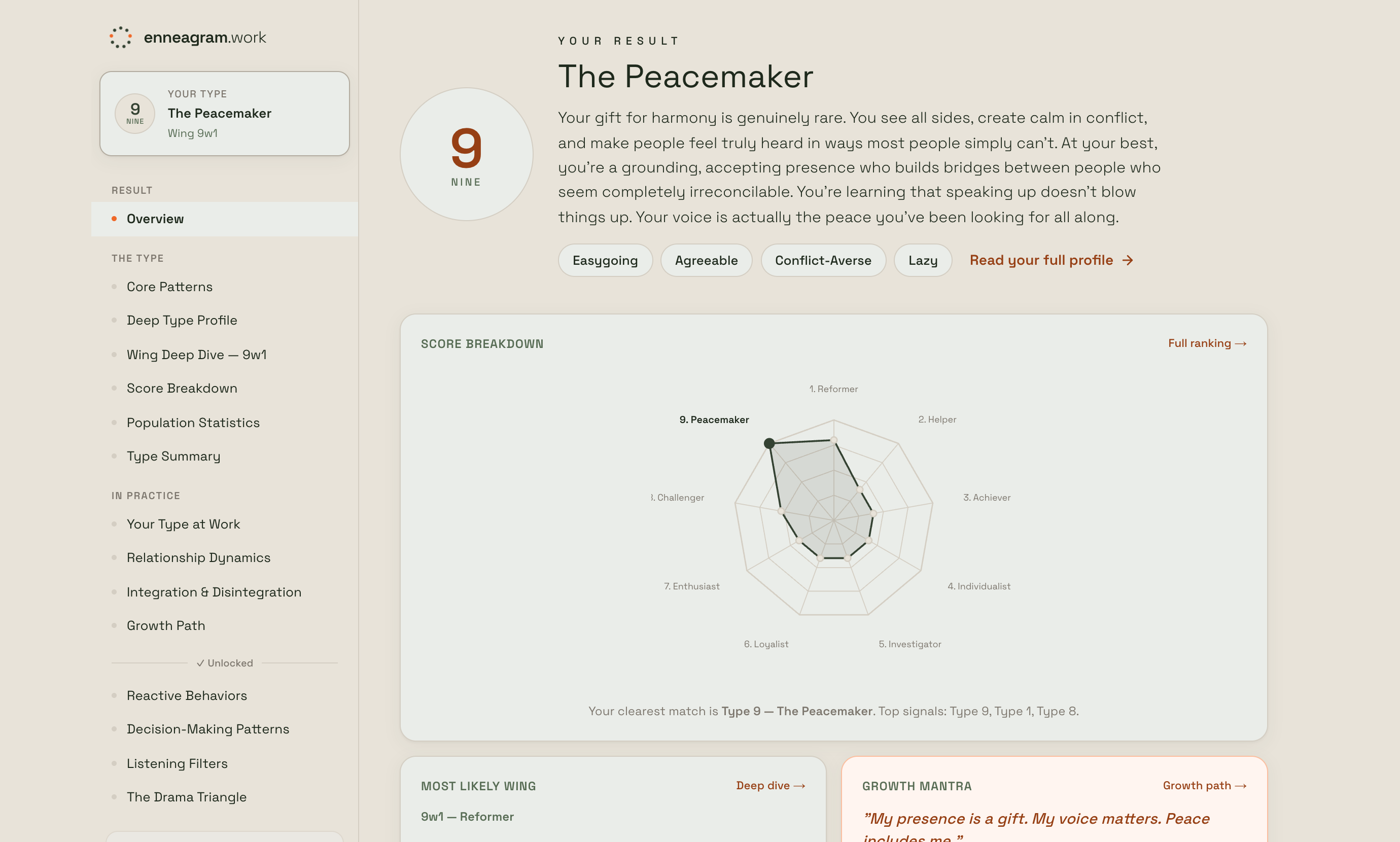
- Your home type and wing, with the reasoning behind the result.
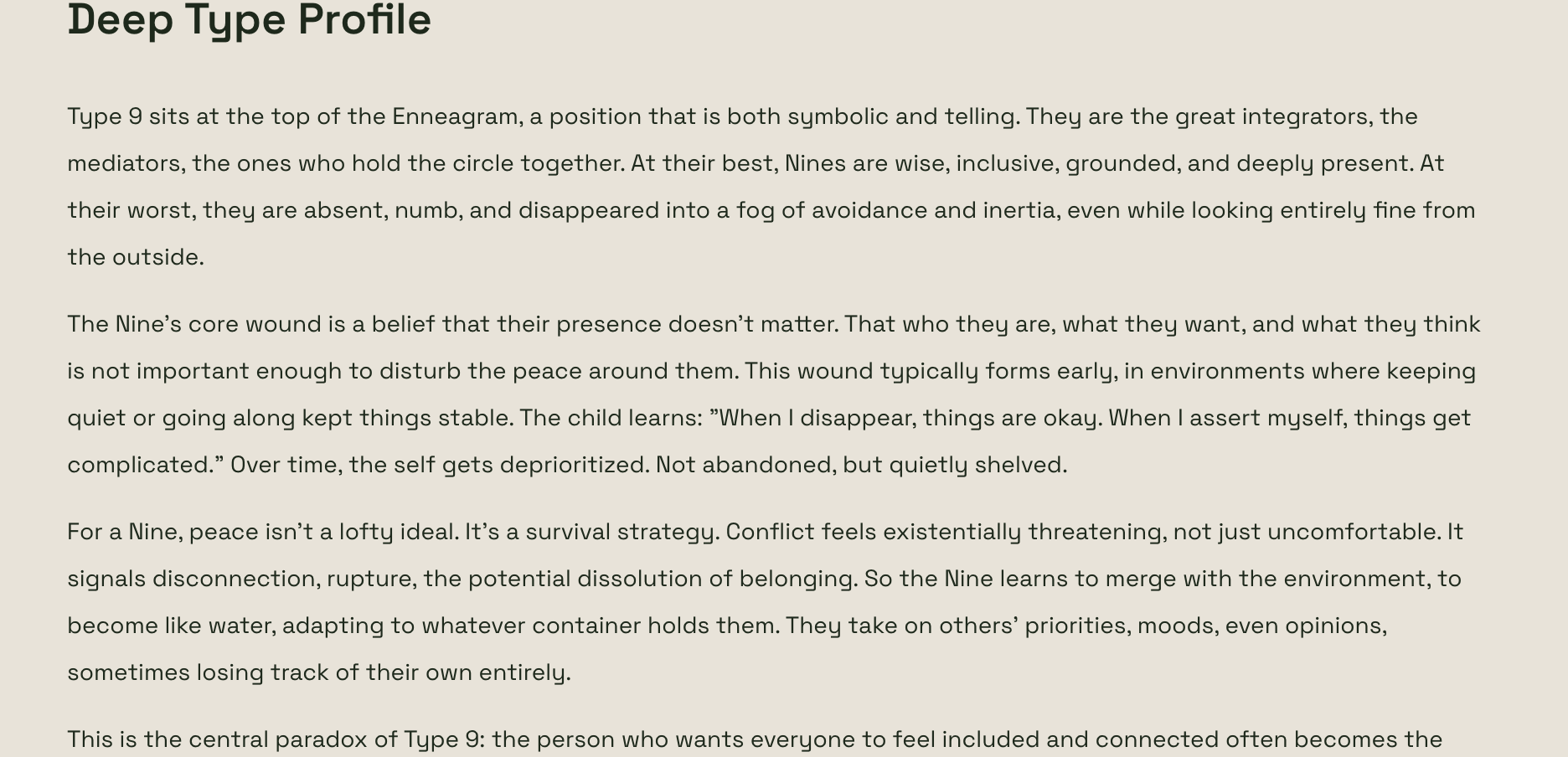
- A full written profile covering your core patterns, growth path, and where you tend to go under stress and in health.
- Practical sections on how your type operates: decision-making, listening filters, reactive behaviors, and the drama that tends to find you.
- A PDF you can keep, revisit, and share with a coach or a team.
Who is behind it
enneagram.work is built by Keith A Gruen, an executive coach who has spent years using the Enneagram with leaders and teams. The written content reflects that work. It is grounded in what actually changes how people show up day to day, and every type profile is written to be read by the person living it and by the people who work alongside them.
Where this is going
The individual assessment and report are here today. Tools for teams and coaches are next: a shared language for a whole group, and a way for a coach to work with the results their clients choose to share. Visibility always stays in the hands of the person who took the assessment.
The best way to understand any of this is to take it yourself. Start the free assessment. It takes a few minutes, and you get your full result with no email required.